
Parallel Agent
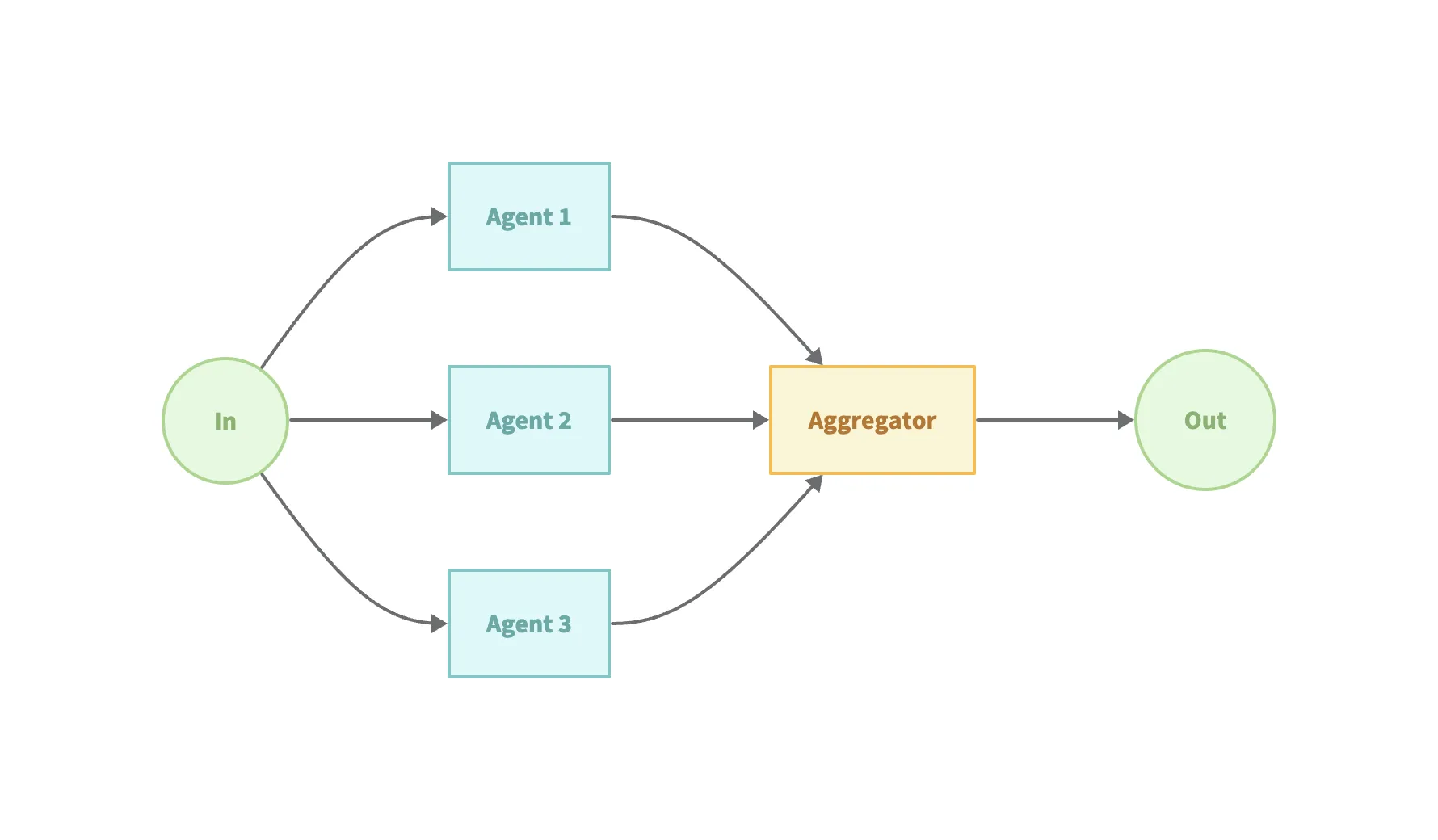
During the execution of a workflow, it is often necessary to run Agents in parallel to reduce waiting time. The Blades framework provides the NewParallelAgent method to construct a parallel Agent.
Core Concepts
Section titled “Core Concepts”Using NewParallelAgent requires passing a parameter of type ParallelConfig, whose structure is as follows:
type ParallelConfig struct { Name string Description string SubAgents []blades.Agent}- name: The name of the parallel Agent, used for identification and distinction.
- description: A description of the parallel Agent, explaining its function and purpose.
- subAgents: A list of sub-Agents contained within the parallel Agent; these sub-Agents will be executed in parallel.
Execution Flow
Section titled “Execution Flow”A Parallel Agent is instantiated using NewParallelAgent. When running the Parallel Agent, it directly iterates through and runs all Agents within SubAgents, collecting the streaming output from all Agents using a concurrency-safe but fixed-buffer message queue, and finally returns the result using yield.
Here, we use an example to illustrate how to use a Parallel Agent in Blades.
1. Create SubAgents
Section titled “1. Create SubAgents”editorAgent1, err := blades.NewAgent( "editorAgent1", blades.WithModel(model), blades.WithInstruction(`Edit the paragraph for grammar. **Paragraph:** {{.draft}} `), blades.WithOutputKey("grammar_edit"),)editorAgent2, err := blades.NewAgent( "editorAgent1", blades.WithModel(model), blades.WithInstruction(`Edit the paragraph for style. **Paragraph:** {{.draft}} `), blades.WithOutputKey("style_edit"),)2. Create a Parallel Agent
Section titled “2. Create a Parallel Agent”parallelAgent := flow.NewParallelAgent(flow.ParallelConfig{ Name: "EditorParallelAgent", Description: "Edits the drafted paragraph in parallel for grammar and style.", SubAgents: []blades.Agent{ editorAgent1, editorAgent2, },})3. Run the Parallel Agent
Section titled “3. Run the Parallel Agent”session := blades.NewSession()input := blades.UserMessage("Please write a short paragraph about climate change.")runner := blades.NewRunner(parallelAgent)stream := runner.RunStream(context.Background(), input, blades.WithSession(session))for message, err := range stream { if err != nil { log.Fatal(err) } // Only log completed messages if message.Status != blades.StatusCompleted { continue } log.Println(message.Author, message.Text())}Complete Code
Section titled “Complete Code”package main
import ( "context" "log" "os"
"github.com/go-kratos/blades" "github.com/go-kratos/blades/contrib/openai" "github.com/go-kratos/blades/flow")
func main() { model := openai.NewModel(os.Getenv("OPENAI_MODEL"), openai.Config{ APIKey: os.Getenv("OPENAI_API_KEY"), }) editorAgent1, err := blades.NewAgent( "editorAgent1", blades.WithModel(model), blades.WithInstruction(`Edit the paragraph for grammar. **Paragraph:** {{.draft}} `), blades.WithOutputKey("grammar_edit"), ) if err != nil { log.Fatal(err) } editorAgent2, err := blades.NewAgent( "editorAgent1", blades.WithModel(model), blades.WithInstruction(`Edit the paragraph for style. **Paragraph:** {{.draft}} `), blades.WithOutputKey("style_edit"), ) if err != nil { log.Fatal(err) } parallelAgent := flow.NewParallelAgent(flow.ParallelConfig{ Name: "EditorParallelAgent", Description: "Edits the drafted paragraph in parallel for grammar and style.", SubAgents: []blades.Agent{ editorAgent1, editorAgent2, }, }) session := blades.NewSession() input := blades.UserMessage("Please write a short paragraph about climate change.") runner := blades.NewRunner(parallelAgent) stream := runner.RunStream(context.Background(), input, blades.WithSession(session)) for message, err := range stream { if err != nil { log.Fatal(err) } // Only log completed messages if message.Status != blades.StatusCompleted { continue } log.Println(message.Author, message.Text()) }}